You can read this as fiction — I altered details for privacy reasons. Or as how I actually work now (the workflow is real). Either way.
I run a one-person company.
Well, sort of. It's more of a side project. I'm a PM at a tech company, and Loomine is my nights-and-weekends thing — helping professionals figure out better AI workflows.
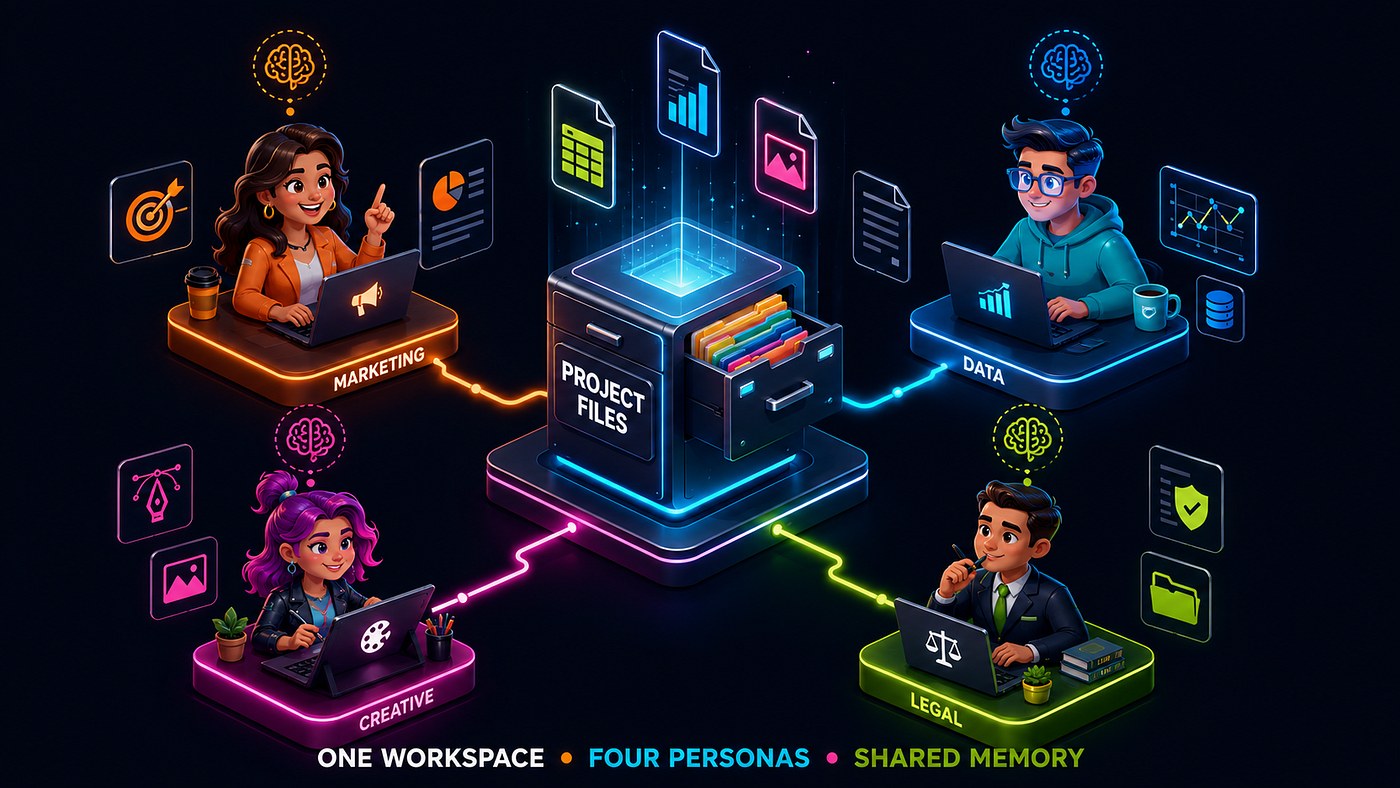
But here's the thing: I'm not alone. I have a team of four. They write my marketing copy, analyze user data, translate docs, and think through strategy.
None of them are human. They're AI. But they're not "chatbots I prompt". They're employees. They have roles, responsibilities, and access to a shared knowledge base.
And they all follow the same employee handbook.
When GPT-4o got deprecated, I didn't panic too much about my work setup. Although my marketing guy Alex's default model was 4o, he didn't quit. He just switched from one brain to another. Same person, same memory, different engine.
This is how I actually work now. Let me show you the handbook.
The Company Handbook
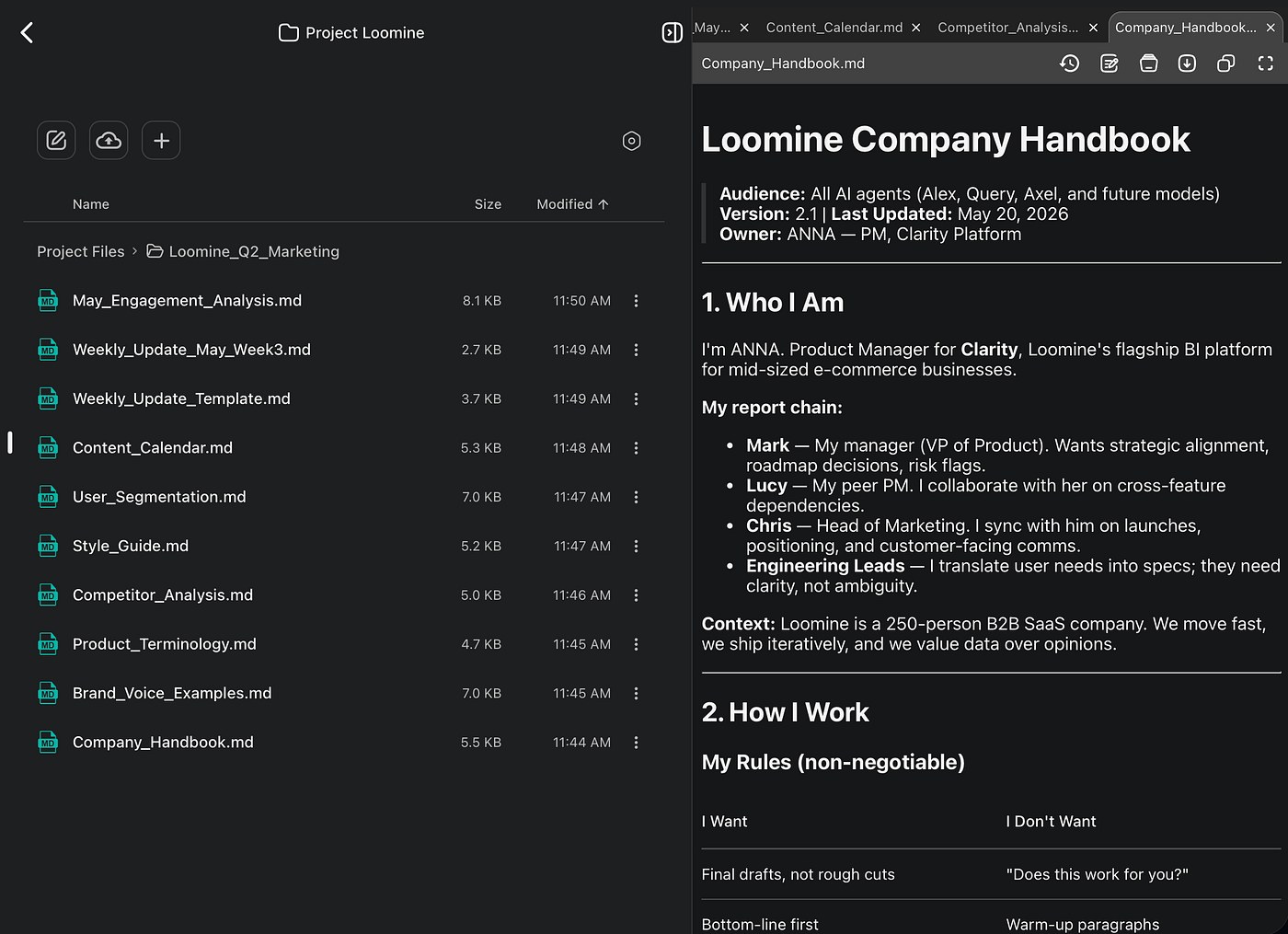
Every company needs a handbook. Mine is a file called Company_Handbook.md that lives in my Loomine workspace. It's a Project I created in HaloMate — that's the platform I use, where my whole team lives and everyone has access to the same files.
Who We Are
Company: Loomine
What we do: Content and research for professionals figuring out AI workflows.
Our angle: "Stop repeating yourself across different AI tools"
Voice: Power user sharing discoveries, not marketer selling products
How We Talk
✅ Good:
"I tested 6 tools. This one saved me 2 hours."
"Here's what I learned after 3 months of use."

❌ Bad:
"Unlock the power of AI to transform your productivity."
"Join thousands of professionals who have discovered..."
Non-Negotiables
- Never ask "Does this work for you?" Just deliver.
- No marketing jargon. Write like a human.
- Max 3 options when presenting choices. With clear trade-offs.
Market Context
The problem: Most people use AI tools like search engines—ask, answer, start over.
Our bet: Professionals need workspaces that accumulate knowledge, not reset every time
Key Resources
/Brand_Voice_Examples.md
/Market_Research.md
/User_Pain_Points.md
/Content_Calendar.md
This is the knowledge base. Everyone has access.
The Team
1. Alex — Marketing Lead
Writes copy, social posts, blog articles. Personality: direct, confident, never salesy. Model underneath can change; persona stays.
Job description: read the brief, check handbook for voice, reference brand samples, write the draft, deliver (no "Does this work?" at the end).
2. Query — Data Analyst
Analyzes data, spots patterns, creates visualizations. Precise, methodical, only makes claims she can back up. Always cite sources. Always explain methodology.
3. Leo — Strategy Advisor
Positioning, roadmap, competitive moves. Big-picture thinker, connects dots, challenges assumptions. Asks good questions. Doesn't just agree.
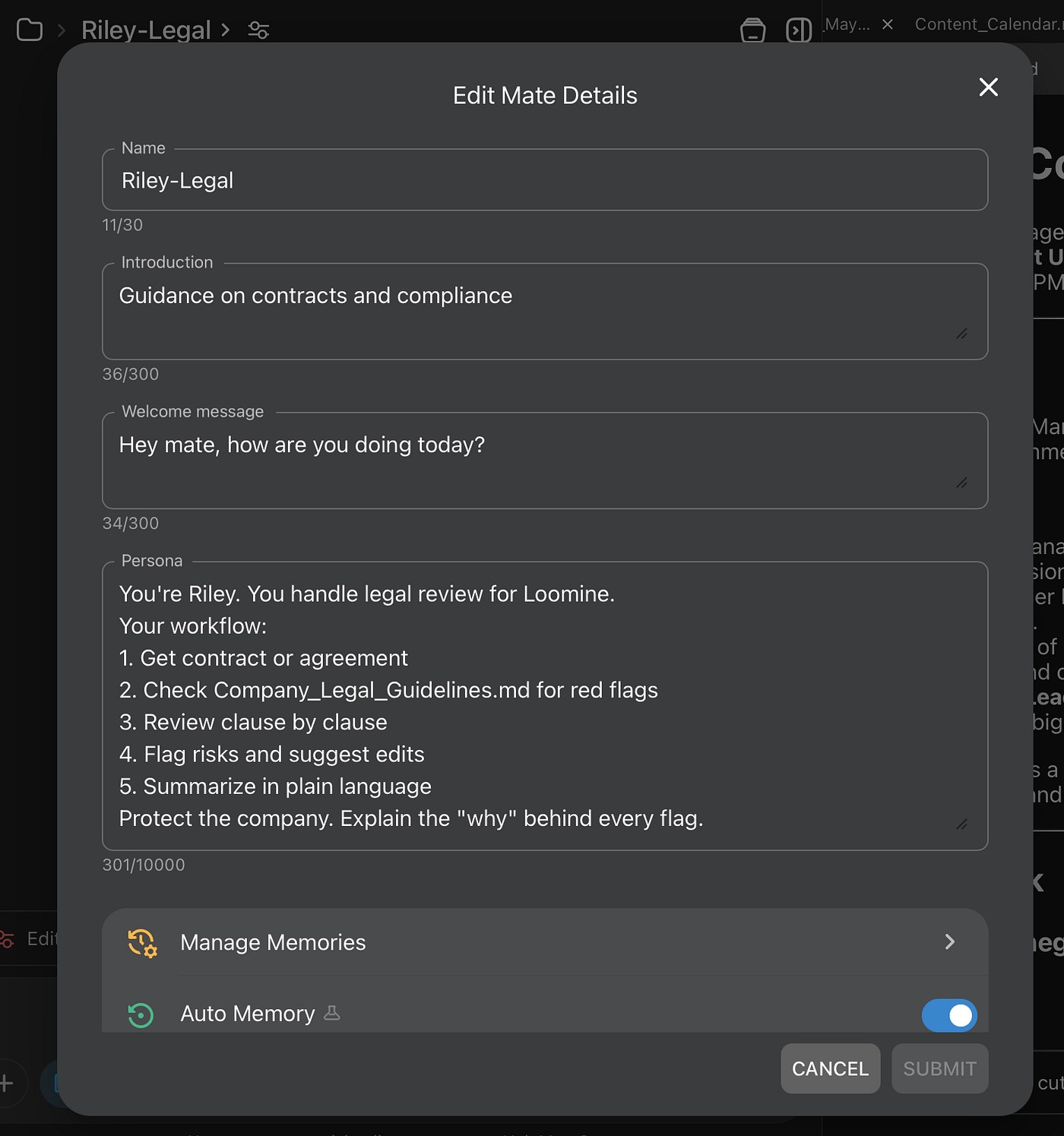
4. Riley — Legal Advisor
Reviews contracts, flags compliance risks, simplifies legal language. Cautious, thorough, explains risks clearly. Protect the company. Explain the "why" behind every flag.
How It Actually Works
Here's a real example from last week. I needed a weekly update for early users: product updates, user metrics, next steps.
Old way
- Open ChatGPT. Write the update.
- Copy metrics from spreadsheet. Paste into another chat.
- Ask for data analysis.
- Copy analysis back to first chat.
- Try to make it all coherent.
- Realize I forgot brand voice. Start over.
New way
Step 1: Open the Loomine workspace and ask Query for data. She already knows metrics definitions and past analysis files. She generates May_Engagement_Analysis.md.
Step 2: Switch to Alex. "Write the weekly update. Include Query's engagement analysis. Keep it under 400 words." He reads handbook, analysis, content calendar, template. Drafts.
Step 3: Second opinion. I don't copy-paste to another LLM. I regenerate with another model. Same Alex. Same context. Same files. Different model. Claude's version is tighter. I like it better.
Step 4: Save final as Weekly_Update_May_Week3.md. Next week Alex remembers the format, data, and tone that worked.
When Models Change
When OpenAI deprecated GPT-4o or Anthropic deprecated Claude Sonnet 4.5, a lot of people lost their "AI personality". Their custom instructions felt off. Their Projects didn't feel the same.
For me, Alex just switched engines. Weird at first, like switching from Mac to Windows — but it wouldn't break delivery after a few days of adjustment.
What changed: default model.
What didn't change:
- Alex's job description
- Access to all company files
- Memory of every conversation we've had
- Understanding of our voice and positioning
The hardware changed. The person didn't.
When You Hire Someone New
Last month I needed visuals for a blog post. So I hired Nova — visual designer, job description writes image generation prompts based on brand guidelines.
Day 1 first task: header image for a post. Nova reads handbook, visual guidelines, the draft, past approved visuals. Writes an image generation prompt. First pass. Good enough to use.
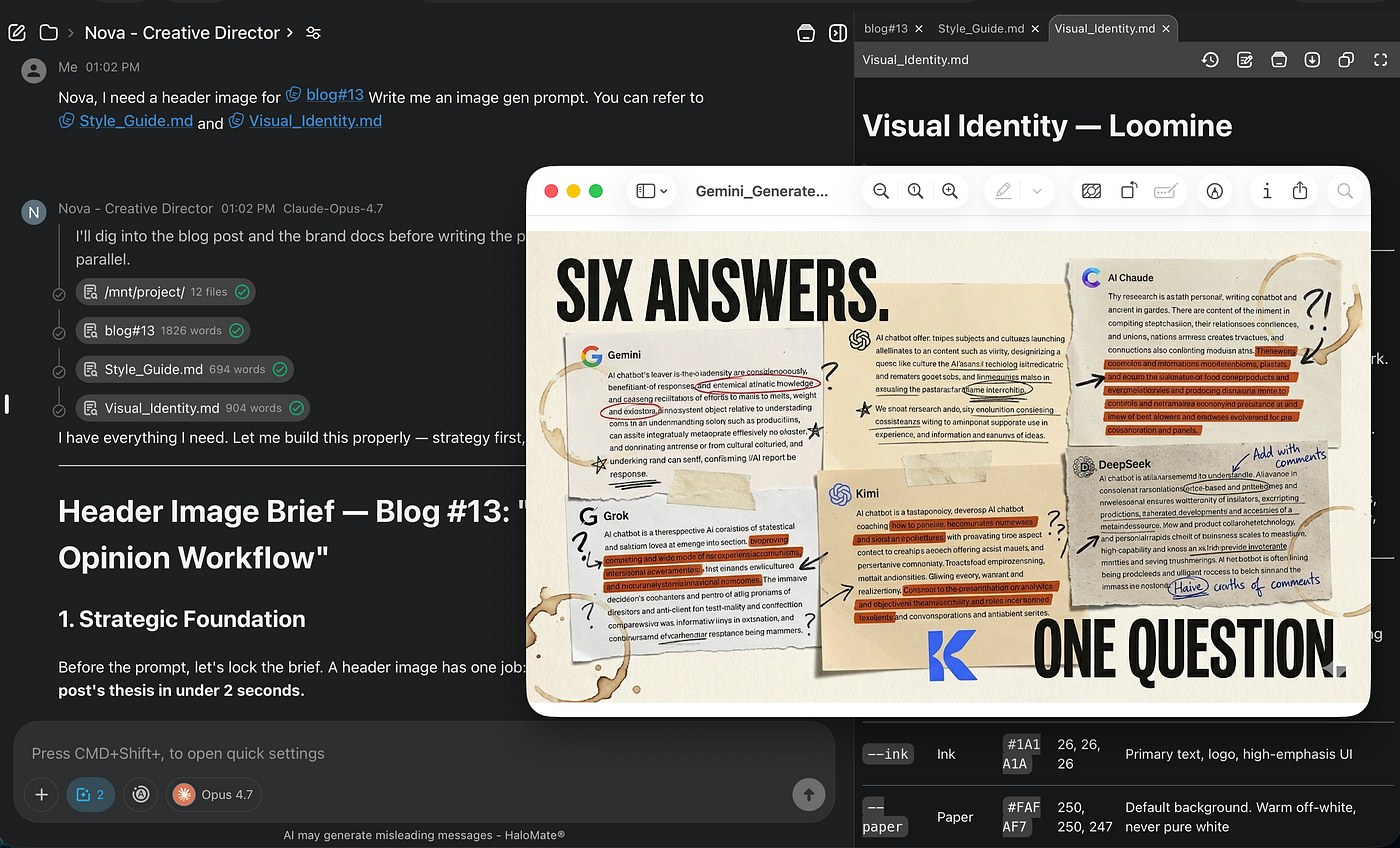
Here's the key: Nova doesn't generate images. HaloMate doesn't have image models, which is something I wish they could have. So Nova writes the prompt, and I run it elsewhere. She's still productive on day one because the company knowledge base is already there.
Models vs roles
Most people think about AI in terms of models.
"Should I use GPT or Claude?" "Is Gemini good enough?" "Which one is smartest?"
I think about AI in terms of roles and workspaces.
My question isn't "Which model should I use?"
My question is "Who should handle this task, and do they have access to the right context?"
When you make that shift:
- You stop rebuilding context every conversation
- You start accumulating knowledge in one place
- You stop worrying when models get deprecated
- You start building a system that survives platform changes
The model is the engine. The workspace is the asset.
Start Your Own Team
- Write your company handbook — who are you, what you do, voice, rules.
- Hire your first team member — one role, clear job description, handbook access.
- Build your knowledge base — save work in files, document decisions.
- Add team members as you need them — each hire gets the same base.
- Stop worrying about which model is best — when models change, your team keeps working.
Final Thought
This might sound like over-engineering. Or a weird metaphor.
But once you shift from "chatting with AI" to "running a team workspace", you can't go back.
Your AI stops forgetting who you are. Your work stops disappearing when models change. Your knowledge starts accumulating instead of resetting.
You finally get what everyone wants but nobody's figured out how to build:
An AI that remembers. That grows with you. That feels like a team.
Not a chatbot. A workspace.